 AUSTRALIA · CONVEYOR BELTING
Belt construction
Rip & Impact Reinforced Belting
Fabric or steel-cord belts with transverse reinforcement to protect the carcass from severe loading damage.
Product overview
Built around the duty.
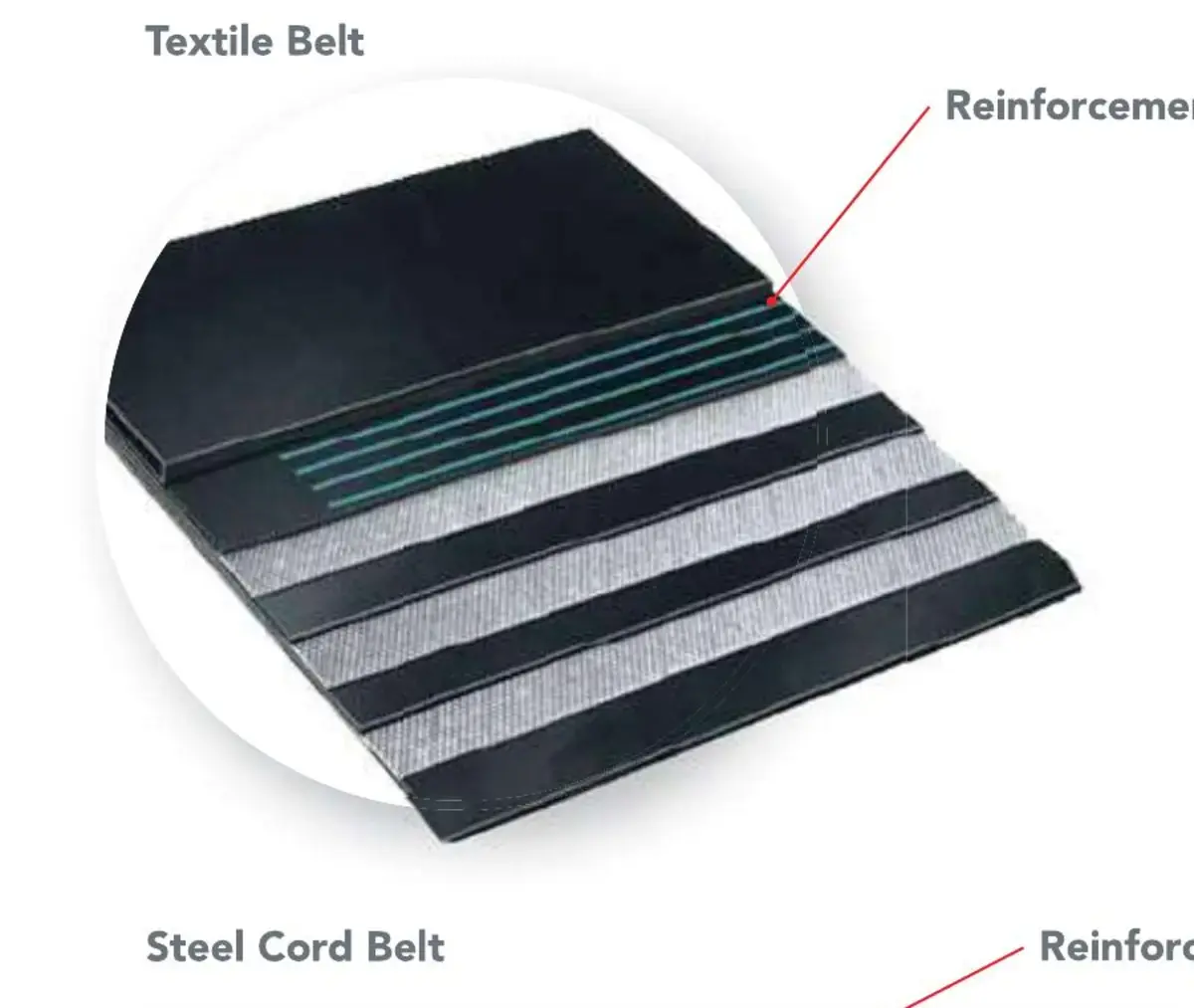
Rip and impact reinforced constructions add steel wires, non-metallic cords or breaker fabrics across the belt. This structural protection is distinct from an impact-resistant cover compound and is selected when sharp lumps, high drops or trapped material threaten the carcass.
Construction & selection
What defines this product.
- Multi-ply or steel-cord base carcass
- High-elongation transverse steel or synthetic reinforcement
- Top-only or top-and-bottom protection
- Improved impact-energy distribution across the belt width
- Breaker arrangement selected around the dominant failure risk
Typical applications
Where it fits.
- 01High drop-height loading
- 02Sharp and oversize lump handling
- 03Rip-sensitive critical conveyors
- 04Severe transfer points
Specification note
A reinforced carcass addresses structural damage risk. Cover compound and cover thickness must still be selected separately for abrasion, cut, gouge and environmental exposure.
Need help specifying a belt?