 AUSTRALIA · CONVEYOR BELTING
Specialist belt solution
Ceramic-Surface Conveyor Belting
Rubber-bonded ceramic inserts for short, high-wear conveyor duties where conventional covers are consumed rapidly.
Product overview
Built around the duty.
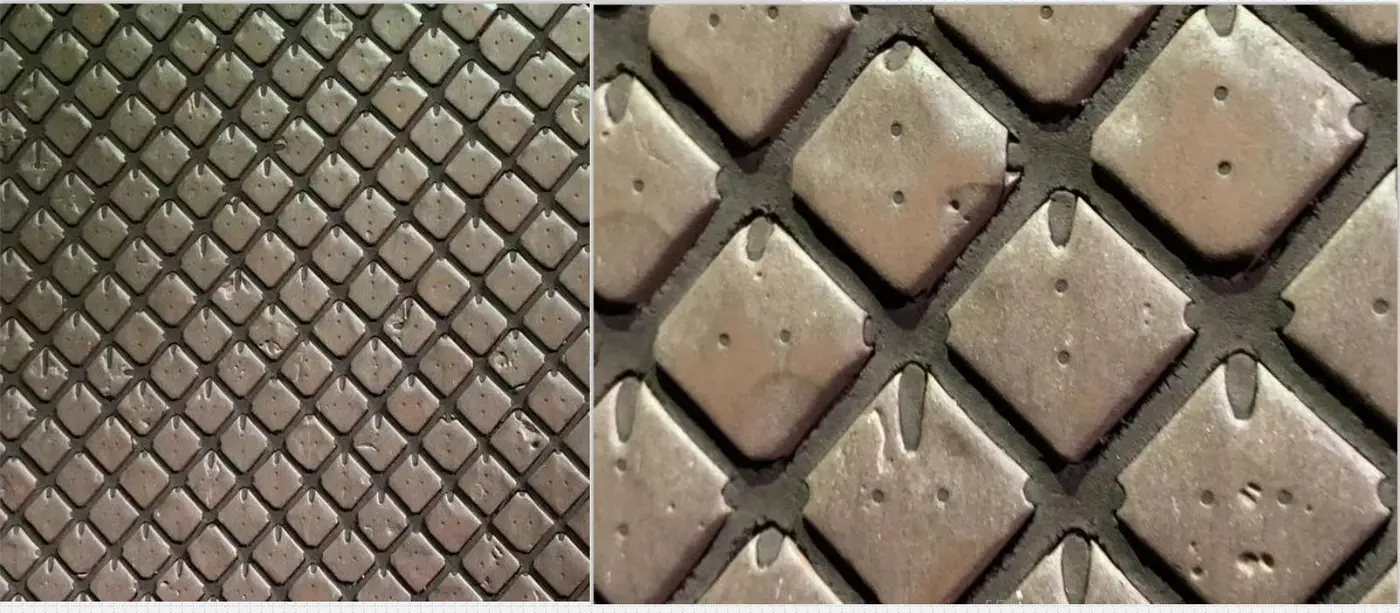
Ceramic-surface belting integrates purpose-designed industrial ceramic inserts into the carrying cover through a chemical and mechanical bonding system. It targets concentrated sliding wear while retaining a flexible rubber matrix and a project-selected fabric, steel-cord or aramid carcass.
Construction & selection
What defines this product.
- Purpose-designed ceramic inserts embedded in the top cover
- Vent holes and interconnected underside features support the rubber bond
- Published ceramic-to-rubber adhesion above 10 N/mm
- Fabric, steel-cord or aramid carcass options
- Impact energy and ceramic retention reviewed for the actual lump size and drop height
Typical applications
Where it fits.
- 01Short high-wear port conveyors
- 02Steel-plant and sinter handling
- 03Concentrated sliding-abrasion zones
- 04Selected iron-ore transfer duties
Surface-system design
Hard wear surface. Flexible belt body.
The product is not simply ceramic placed on rubber. Insert geometry, rubber bond, carcass flexibility, impact loading and splice placement all determine whether the surface remains stable in service.
Engineered ceramic
Published ceramic properties include high hardness, bending strength and temperature stability for concentrated abrasive duty.
Mechanical bond features
Surface vents and interconnected underside holes allow rubber to key into the insert and support gas discharge during manufacture.
Application-selected carcass
Fabric, steel-cord and aramid options allow the tensile member to be matched separately from the ceramic wear surface.
Planned splice and replacement
Splice geometry, remaining ceramic depth and replacement timing are reviewed before wear threatens the underlying carcass.
Published technical parameters
Selection envelope and material data.
The limits below come from the supplied Ceramic Conveyor Belts information. They define an initial screening envelope, not automatic suitability.
| Parameter | Published value | Selection implication |
|---|---|---|
| Ceramic insert option 1 | 20 × 20 × 6 mm | Confirm layout, cover depth and minimum pulley geometry |
| Ceramic insert option 2 | 25 × 25 × 9 mm | Confirm added mass, flexing and impact duty |
| Ceramic bending strength | ≥ 370 MPa | Assess impact energy as well as sliding wear |
| Ceramic hardness | ≥ 14.0 GPa | Targets severe abrasive contact |
| Ceramic-rubber adhesion | > 10 N/mm | Bond performance remains dependent on manufacture and service |
| Rubber tensile / elongation | ≥ 18 MPa / ≥ 550% | Published cover-rubber properties |
| Rubber abrasion loss | ≤ 200 mm³ | The ceramic inserts provide the principal wear surface |
| Belt-surface temperature | Below 100°C | Confirm normal, peak and transient hot-material exposure |
| Trough / incline | Below 35° / below 12° | Routes outside this envelope require separate engineering review |
Ceramic hardness alone does not establish service life. Material impact, belt flexing, insert layout, ceramic loss pattern, rubber integrity and splice location must be reviewed together.
Published field trials
Measured improvement under defined duties.
The supplied presentation records two comparative trials. The results are useful evidence for screening similar duties, but they do not create a universal life multiplier.
Laboratory wear comparison
Published abrasion-resistance comparison with a conventional abrasion-resistant belt.
Steel-plant sinter trial
Published against a 20-day original-belt life under the recorded trial conditions.
Australian iron-ore trial
Published against a 240-day original-belt life under the recorded trial conditions.
Trial duty, belt speed, drop height, material, temperature, trough angle and belt construction are specific to each installation. Comparable performance must be validated from the new conveyor data.
Specification note
Ceramic-surface belting is a specialist engineered product. Confirm the actual wear mechanism, material impact, surface temperature, trough and incline angles, pulley geometry, splice arrangement and replacement strategy before supply.
Need help specifying a belt?